
The Most Beautiful Game
"GO ARGENTINA", "GO SPAIN", "GO MAX WEBER and the protestant work ethic!"

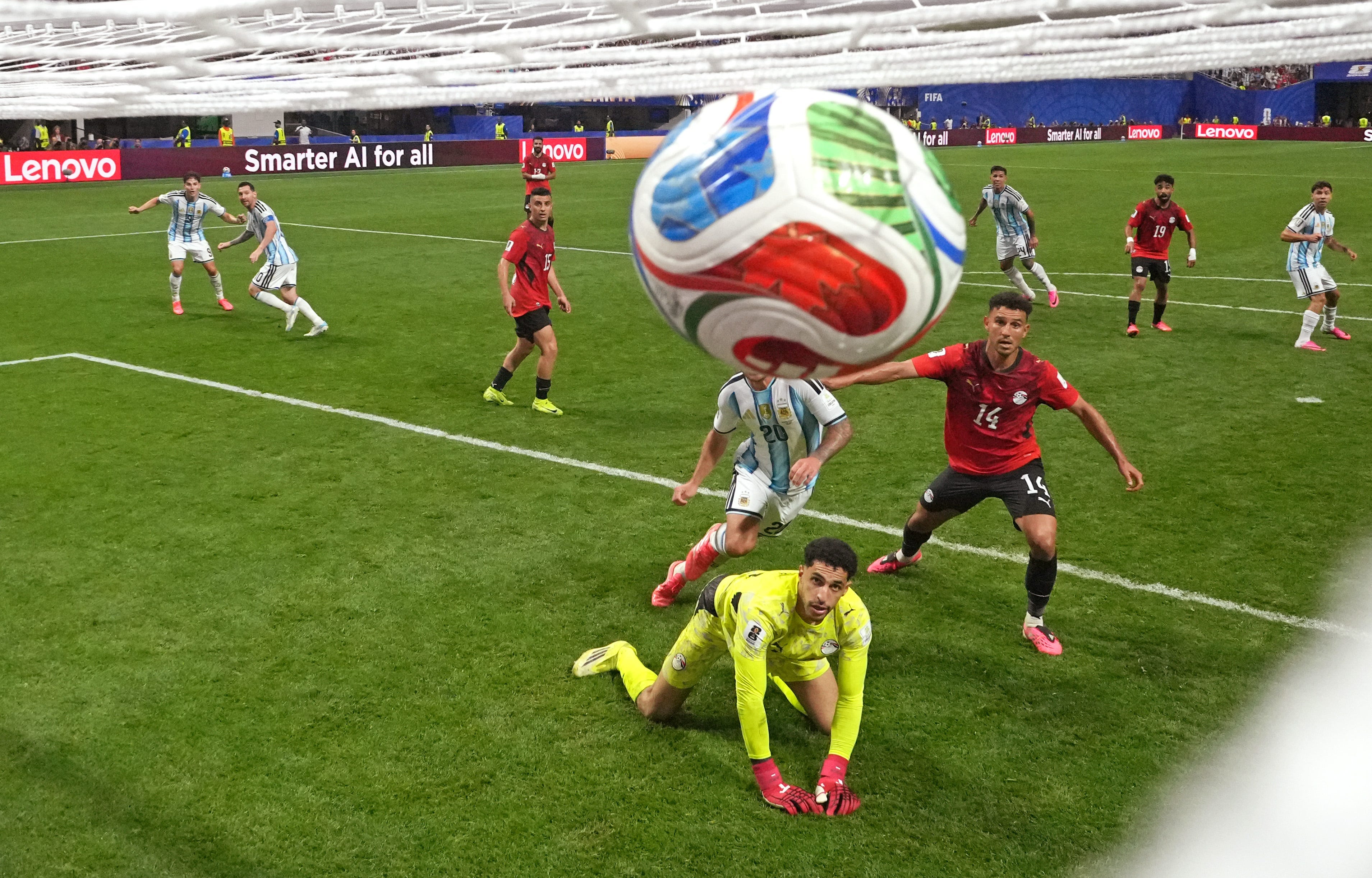
The final of the 2026 FIFA World Cup was last week (I was sick and had electrical issues at home, so I couldn’t get to it on a timely manner). Obviously I wanted Argentina to win, but we played like ass, or, more accurately, Spain played like ass and we played like the shit that came out of that ass. Regardless, the World Cup has been subject to a lot of discussion over its development - from stupid conspiracy theories (dumb) to whether hydration breaks are a good idea (no) to whether Jude Bellingham is the best looking player ever (no, next to Kaká he looks like Ronaldinho). But there’s been three subjects I think are the most interesting: whether America can produce its own Erling Haaland, whether pentecostalism is to blame for Brazil’s World Cup decline, and whether VAR is ruining the game or not.
Haaland, Haaland
Why doesn’t the United States dominate “soccer”, if it has the biggest, strongest, fastest athletes? If it put up a few of them into “soccer”, it would have the best team in the world, of 11 Erling Haalands (or 10, and, inexplicably, Christian Pulisic). The United States is a country of 300 million people; it should have some world-class players, at least 11. Why doesn’t it have an elite team?
The main problem is that Haaland’s big gift isn’t really his speed or strength; it’s his pinpoint accuracy at picking the right moment to attempt a goal. He spends most of the game walking, not running, and is unusually tall and big for a striker; his actual ability, again, is to have a good instinct for when to score a goal, at which point his physique becomes a bonus, rather than the other way around. The most famous example of an elite squad run by the principle that physical superiority, speed, and strength ought to be prioritized is Marcelo Bielsa’s Argentina in the 2002 Korea/Japan World Cup. Bielsa is now and was then one of the world’s best respected managers, and Argentina had one of its best lineups in history; in fact, the country’s best player, Juan Román Riquelme, was left off the team because he wasn’t fast enough. So did Argentina win? No. Did it make it to the finals? No. Semifinals? No. Quarter finals? No. Round of 16? Not even. Argentina got sent home after the group stage for the only time since the early 70s; its unbeatable squad was constantly exhausted and injured, and tactically the team was always getting outmaneuvered and outplayed.
The main reason Americans cite is that their players “are busy in other sports”, which is true, but also reveals the real reason the United States is bad at football: it just doesn’t have the infrastructure to produce elite players. American athletes are, on average, discovered by leagues at 14 to 18 years old; football stars are discovered in kindergarten or early primary school. This reflects a significant institutional difference between American sports and the football leagues: they are, simply, both too competitive and not competitive enough. It is true that the American leagues are more competitive: only four teams have won two championships of any of the three main ones (NBA, NFL, and MLS) in the last decade, and none have won more than twice. In contrast, Bayern Munich has won the Bundesliga all but one year since 2013; Manchester City has won the Premier League, the most competitive in the world, 7 times in the same time period; Barcelona and Real Madrid have won all but two Spanish league titles since 2003 (both of the other two going to the same club, Atletico Madrid); Paris-Saint-Germain has won the French league every season but two since 2012. But the reason for this is that football is more economically competitive: most American leagues have some version of a “draft”, where teams get to pick new players in reverse order of league standing, plus a total cap on the amount payable in player salaries. This keeps competitive balance between teams while permitting them to retain star figures. In contrast, football clubs don’t have much limits on how good their players can be: Kylian Mbappe, Jude Bellingham, Vinicius Jr., Cucurella, Eduardo Camavinga, and Thibault Courtois are all among the top ranked players for their roles and all play for the same team (Real Madrid) because it has the money to hire them.
But Real Madrid, here’s the thing, isn’t especially good these days. They haven’t won anything in two years, more or less the biggest trophy drought in nearly two decades for Spain’s historically largest club. And that’s for a team that has the best players in the world, or as close to it as they can get to. Instead, the Spanish league is dominated by Fútbol Club Barcelona, which has been close to bankrupt for the better part of a decade and, in fact, had to fire club legend Lionel Messi behind his back in 2021 because they were entering financial tutelage and couldn’t afford the financial cost of his contract. Every time they’re in a high-stakes match, they choke, in large part because of tensions between the star players - if everyone is worth 200 million dollars, and they know it, then why would they listen to one another.
Of course, Barcelona’s dirty secret (like the rest of every other major European team) is that they source basically all of their players from their own academy, La Masia, which occasionally goes viral by showing the insane skills the players have. These kids are recruited very young, usually at 5 or 6 years old, and receive all of their education from the club. They’re scouted at a local club or, more frequently, at a smaller club’s academy. The two most consistently powerful teams in Europe, Barça and Bayern Munich, both have their own legendary academies, though Bayern’s has declined in importance in recent years.
A recent-ish post by Matt Yglesias I think illustrates pretty well why this doesn’t happen in the United States: money. The post mentions “thousands of dollars”; in 2019, Zlatan Ibrahimovic said it would cost 3,500 dollars a year to get his children into an academy; now, it’s probably even more. How much does Club de Fútbol La Torreta, the small local team that discovered Lamine Yamal, cost a year? Between 15 and 30 euros depending on what kind of discount you can get. Joining AS Bondy, the club where Kylian Mbappe first started playing, is a bit pricier, at around 200 euros a year. The team is obviously subsidized: La Torreta features funding from the city government and a few NGOs, as well as private sponsors. But there’s a gigantic cost difference: in America, competitive children’s football costs thousands of dollars a year, which the parents pay to the clubs; because the parents pay, then the pressure to compete and perform is greater, which makes the contests a lot more psychologically damaging, leading to burnout; in addition, the pay-to-play model of American youth football means that the teams themselves prioritize short-term performance over long-term player development, a factor worsened by the typical means of funding the team academy, fees from transfers of professional players, isn’t really fully implemented. And the specific structure of the American league (which doesn’t have relegation or promotion, the main competitive pressure on teams to perform1) also means that teams don’t face a particularly intense pressure to deliver once they have players, which is why the MLS is basically a retirement league for washed unc European league players like Antoine Griezmann and Lionel Messi. It’s also why, after winning four Women’s World Cups (including two back to back ones in 2015 and 2019), the US National Women’s Team has fallen off dramatically: European teams started seriously investing only in the last 6 or 7 years, which has quickly caught up with the US’s longstanding advantage in player development because of Title IX requirements to equally fund athletic programs.
The typical solution proposed is national funding: after all, that’s what Germany did after crashing out of the 2000 and 2004 Euro Cups at the group stage, and afterwards it won the 2014 World Cup. There’s a bit of a problem there: timing. Germany had won the 1990 World Cup, did meh in 1994 and 1998, and finished second at the 2002 World Cup (where they would have lost 1-0 to the greatest team to ever play if their goalkeeper hadn’t literally dropped the ball), then finished third in both the 2006 and 2010 World Cups. They also came in second in the 2008 Euro Cup, and third in the 2012 edition. That is, the narrative that Germany was doing badly until they started investing in children’s sports, which was a generational bet that paid off in 2014, is just not very accurate. Most of Germany’s players were veterans at the midpoint of their careers. In fact, the generation of players that grew up in the aftermath of the new system started playing in 2018 and 2022, when Germany didn’t make it out of the group stage; in 2026, the greatest goalkeeper in Europe, World Champion Manuel Neuer, was outperformed in penalties by Orlando Gill, who hasn’t been paid by Argentina’s fifth largest team in six months. Germany went home in the round of 32.
From pentachampion to pentecostal
In all of history, the most successful team at winning World Cups is Brazil (unless you count Uruguay beating Tyre in the finals of the 4,000 BCE Lower Egypt World Cup with a hat trick from Methuselah). However, the team has not been significantly successful in the last decade: after winning in the 2002 World Cup against Germany, it got knocked out in the quarter finals in 2006 and 2010, lost 7-1 to Germany in the 2014 semifinals, got knocked out again in the quarter finals in 2018 and 2022, and lost in the round of 16 to Norway a few weeks back. Brazil is capable of producing stars: Vinicius, Endrick, Marquinhos, Raphinha, and even Neymar are still top notch players. Why, despite having a world-class team with the best manager in the world (Real Madrid’s Carlo Ancelotti), the team got outplayed by Japan and Norway?
One reason, with a lot of viral clout, is Protestantism. Only two Protestant nations, England and Germany, have ever won a World Cup; Germany has had rough parity between Catholics and Protestants for decades now, and England has won exactly zero other trophies in the sixty years since it secured its Jules Rimet by the second most questionable goal in World Cup history. Since the 1990s, evangelical forms of Christianity have become extraordinarily popular in Brazil. In 1991, Evangelical Christians made only 10% of the Brazilian population; by 2022, they reached 27%, and around 60% of Brazil’s team is evangelical, compared to a minority in the nineties and oughts: a handful, like the aforementioned Kaká were evangelical, but most leading players of the 90s and 2000s were Catholic. These players were a lot more fond of partying and dancing: most of Brazil’s pre 2010 stars had turbulent personal lives, with Roberto Carlos fathering 11 children with different women, Romario saying he would play badly if he didn’t party all night right before matches, Ronaldo (no not Cristiano, the fat one) being extorted by transgender sex workers after he refused to pay them, and Ronaldinho going to Paraguayan prison and winning a roasted pig in their football tournament. It’s conventional wisdom that the merry, easygoing nature of Brazilian culture, influenced by dancing and music, influenced their jogo bonito (beautiful game) style of play that focuses on improvisation, individual style, creative flair, and isolated moments of brilliance.

Why did evangelical Christianity blow up in Brazil? This is, of course, a frequently mentioned topic on this blog: what is commonly called “neoliberalism”. Brazilian trade liberalization caused a substantial increase in unemployment, due to employment losses in trade-exposed labor-intensive industries, such as textiles, which were themselves unevenly concentrated throughout the country. Decades later, these locations had a much higher share of Protestant and evangelical affiliation than ones that were not harmed by opening the country to foreign goods. The authors explain that Pentecostal churches rely very heavily on faith healing and other esctatic practices, which bring spiritual solace to people in profound distress - it gave a framework to reject alcoholism, domestic instability, and community decay, and provided people with an alternative. In addition, the paper draws a line through what is known as the “Prosperity Gospel”, which teaches that sufficient faith and active petitioning of God will deliver them material prosperity and wellbeing; in contrast, the Catholic alternative of liberation theology simply focused on structural problems (and was violently repressed by the Brazilian government and condemned by the Catholic Church). This is, roughly speaking, the content of the “pray like a gringo, play like a gringo” thesis: traditional Brazilian football is inspired by cultural touchstones like Samba, which are treif in Pentecostal culture. Instead, the argument goes, Pentecostalism has prompted players to decide that the doctrine of predestination applies to specific games - a number of Brazil’s players simply said it was divine will that they lost to Norway.
The main problem is that this is exactly the opposite of the mainstream understanding of what the Protestant Work Ethic is about. In The Protestant Ethic and the Spirit of Capitalism, Max Weber argues that Calvinism and the doctrine of predestination (that everything that happens is God’s plan) produces assertiveness rather than passivity: since you can't know if you have God’s favor, you look for signs of it in the real world, and the sign became worldly success achieved through methodical, disciplined, rationally organized labor. Protestant anxieties about salvation produced an obsessive focus on deferred gratification and self-control, which should, in theory, make a country better at playing a highly tactical game, not worse. The empirical literature on why Pentecostalism appeals to the Brazilian working class is almost entirely about salvation from precarity (sickness, addiction, poverty, crime) and not about internalizing a work ethic of self mastery or about predestination to greatness. If anything, the prosperity gospel is the least self disciplined version of Protestantism imaginable: it promises material, tangible rewards now in exchange for faith.
There is, however, someone else who has spoken about Brazil’s football decline: Cafu, captain of the 2002 national team, and one of two players to play in three World Cup finals (the other one being Messi2). At a LEGO event (yes, really) held shortly after his team was eliminated, Cafu said that “Today we’re not developing players, we’re developing competitors, (…) When you set up a youth programme where you’re obliged to win, you’ll develop competitors; you won’t develop proper athletes with creative freedom” and that “At eight, a child should be playing with a ball, laughing and having fun.” This comes after another famous quote by him “the more we have Brazilians moving to the Premier League, the less chances for Brazil to win the World Cup. Imagine being brainwashed by the media every week that you are the best in the world, meanwhile you are not near the best”. Put another way he finds that Brazil’s football has the same problems America’s does: too much emphasis on competition at a childhood level, too much emphasis on money, and too much competitive pressure.
In particular, Brazil has a problem that few countries have: it has too much talent, which means all of its most talented players get scouted very early by foreign clubs, which means they don’t develop a cohesive style of play with each other because they’ve never actually played together. In fact, Brazil also has too much money, because after 2021 the country allowed its teams to become for-profit limited liability companies instead of being mandated to remain under the nonprofit control of their members. This led to a large influx of capital into sports, which led to some of the for-profit teams (Mineiro and Botafogo) winning the national championship and the Copa Libertadores, but most of the trophies have stayed in the hands of traditional nonprofit clubs like Flamengo, Palmeiras, and Fluminense. The for-profit teams have also had a series of problems of their own: Vasco da Gama went bankrupt because of financial difficulties of its American owners, Cruzeiro was bought and sold by Ronaldo (the fat one) within two years, and Botafogo was hollowed out to rescue the debts of its foreign owners’ other club, Olympique de Lyon.
There is kind of a perverse contrast between Brazil, which has allowed for-profit clubs, has dominated the South American tournaments, and has also more or less completely imploded on the international stage, and Argentina, which so far hasn’t budged on the topic (it’s a major source of contention between the football association and Milei), has suffered in regional rankings, but also has won two Copa Americas and reached two back-to-back World Cup finals. I think the difference relies on player development: Brazil has the money to keep top talent, but doesn’t have the financial incentives to develop it (at least given how badly all the major private clubs have been managed thus far), while Argentina’s teams are more strongly incentivized to develop young promises because it’s really the only way they can profit from trading them. This means talented young players like Julian Alvarez, Enzo Fernandez, and Valentin Barco get sold to other clubs instead of playing for River Plate and Boca Juniors respectively, but they also start by playing for them at all, which means a “national” playing style still remains such that a good enough squad and a good enough manager can be competitive at an international level.
Ironically, the perfect example of this is the “method over madness” description of Spain’s victory over Argentina: Spain have become (especially according to Cafu) the world leaders in talent development, having an extremely well developed system of academies and training. The most prominent example is obviously Barcelona, whose La Masia academy was built on an extremely methodical player-development system in world football built on highly standardized, uniform, and codified pillars: possession-based positional-play, formal academic training, and careful psychological, and physical oversight of players. Spain actually very explicitly sought to form a system where players would out-think rather than out-muscle opponents, in contrast to their older, more traditionalist "Furia Roja" footballing identity built on physicality and passion. And the fact that Barcelona has been financially strapped for the last 5 years actually helps this dynamic: they have to be extremely careful with acquisitions and have instead, and historically, focused on developing their own talent, which they can then trade after they become highly skilled players. Real Madrid, which has historically been the bigger club but has struggled against Barça for most of the recent past, is usually less focused on player development and more on player acquisition: club president Florentino Pérez was elected on the promise of purchasing the captain of Barcelona, Luis Figo (it’s as if the Chairman of the DNC was elected on the promise of making Donald Trump change parties). So far their only good decision regarding player development has been to sell one of the team’s most promising young talents, Nico Paz, to a minor Italian club with a repurchase agreement for a prize far below his potential market value; the slight hiccup is that the Spanish-born Paz signed for Argentina’s national team and is trying to delay his return to Real Madrid, where he most certainly wouldn’t be a major player, let alone the main star. Major European teams typically don’t care for their emerging talent very well: Lamine Yamal, even though he plays for Barcelona, has played around four times more per season than Messi had at his age. Yamal’s predecessor wearing Messi’s number ten jersey is kind of the perfect cautionary tale: Ansu Fati was another miracle child from La Masia who had a few outstanding early seasons before becoming injured, falling off the team’s rotation for a while, not showing up much in the 2022 World Cup, and finally being sent off to Brighton and then Monaco. Argentina has so far had three future breakout stars (Dybala, Garnacho, and Mastantuono) fall off the face of the Earth due to frequent injuries in Europe. It’s entirely possible that the lengthy careers of top players like Messi and Luka Modric just aren’t possible anymore given how much, and how early, is demanded physically from players even in the more humane clubs. And this is mostly because of the financial pressures placed on clubs.
Eye in the sky
I recently watched a documentary called Subject to Review about the introduction of HawkEye, an electronic refereeing technology, to tennis. HawkEye is a system that simplifies the world by algorithmically linking photographs of the ball with a mathematical model, constructing a simplified 3d model of the court at any given time to track the position and speed of the ball. Like any other computer program, HawkEye has its limitations, with a margin of error of 3.6 millimeters; the fuzz of a tennis ball is 4 milliliters wide, and the rules of tennis allow for a margin of error of 5 millimeters on calls. Because HawkEye operates on an idealized version of the court with perfectly straight lines and perfectly smooth surfaces, it has to make assumptions about the game that are just as, if not more, flimsy and controversial than human judgment: a shot by Rafael Nadal gets called within lines by 1mm, when by the very logic of the system the ball can either inside or outside.
HawkEye is remarkably similar to Video Assisted Refereeing, or VAR, a technology used by FIFA to review certain violations of the rules during major tournaments. The most notable uses of VAR are to call fouls and to call offsides - situations in which a player takes a position ahead of the second defender closest to the goal. VAR has been one of the more controversial pieces of World Cup discourse, largely by extremely ignorant (American) viewers who see it as some kind of untowards interference by FIFA. But even without the stupidity, it’s not flawless: a last-second equalizer by Croatia against Portugal was ruled out because a Croatian player’s hair touched the ball before it was kicked into the net; a goal by Belgium against the United States was reviewed for a potential foul for so long that by the time VAR allowed it the Europeans had already scored another goal, one without any possible fouls (yes, that one). A kick by Norway was derailed by the VAR camera itself, which is visible with the naked eye, but FIFA claimed their sensors didn’t detect anything with a painfully uninformative chart. Goals by Egypt and Spain against Argentina were ruled out by VAR because of prior fouls, except the actual fouls weren’t shown because they weren’t by the player who had the ball. VAR, in general, works the same as HawkEye, combining rapid photography with statistical inference and live sensor feedback from the ball itself; the problem is the ball is far more sensitive than the pictures, resulting in notorious gaps in position: even at current speeds, because the ball and players move so much more quickly than they can be pictured, the margin for error on VAR calls (particularly offsides) is extremely high. UEFA tournaments have a five-centimeter allowance to account for this; FIFA does not consider any margin of error.
In the late 19th century, a man named Edward Muybridge proposed using a system of trip wires that snapped pictures of horses right as they stepped on the wires to settle certain questions about the animals. By 1881, his invention was used to settle the winner of horse races, prompting Muybridge to ask whether human judges were necessary at all. Soon after, a photo was recorded of a horse with saliva coming out of its mouth - does that count as crossing the line? Muybridge’s prediction that no important competition would be settled without the help of photography has proven correct. Football uses VAR; tennis uses HawkEye; baseball uses Automated Balls and Strikes, or ABS. The main strength of these is also the main weakness: the belief that these mathematical systems are more reliable than our two eyes. Subject to Review explicitly draws a parallel between review by HawkEye and divine judgment, a moment of gazing at the skies for a revelation. By presenting multiple moments of behind the scenes making of moments, the film seeks to remind us of what it tries to say: that any collection of images and sounds is a fiction. How real it is and how seriously we take it is up to us.
The comparison basically everyone has made is between VAR and AI: the idea of AI is that it can replace fallible human judgment with flawless judgment by a computer program. Of course, it’s worth noting that VAR hasn’t, on average, changed the game much: not the behavior of the players, not the outcome of the games, or the actual content of the calls by referees. AI tools, in addition, have been criticized countless times for the possibility of them becoming deformed and polluted by preexisting bias in the training, or actual, data. One of the more common arguments for AI is that, because it is a centralizing technology (it’s a piece of software that is the same for everyone, based on a joint and single corpus of facts, and follows the same basic underlying rules for all users), then it will restore trust on social institutions at some level: I’ve always thought this was kind of a dumb take, because firstly, it’s not even clear AI actually is better at informing people of facts than social media, and second, because people don’t actually trust technology no matter how closely they understand it. 91% of football fans oppose VAR and only 2% think it has a positive effect on the game, a much worse rating than basically any institution of the American government. Instead, people see these machine-driven processes as more opaque than human decisionmaking, because it’s not actually clear who is responsible for the decision: one of the more controversial VAR calls is mistaken identity, where a player receives a yellow card because of supposedly fouling a player of the other team, when in fact the other player is fouling them and the referee carded them in error. In effect, this means that VAR automatically reverses a mistake by the referee if a player takes a dive to incite a yellow card. In practice, it means that sometimes players look like they were fouled, then a machine nobody trusts makes a decision nobody understands, then the player that looks like they were the victim gets a yellow card.
The main problem with these sort of machine-centric instruments of decisionmaking is that football is a game, and one that people experience as a narrative and not as a technical display. Again, the main reason why people think that Egypt foul call was suspicious is because it wasn’t shown on the television when it happened (FIFA only licenses one carrier to record each game for logistical reasons, so nobody saw it on their broadcast), and the replay was overshadowed by the more heated arguments on the field. The game is also, largely, based around specific moments that have a high component of luck: in the Argentina-England game, the difference between Argentina not scoring any goals and losing and scoring 6 goals in ten minutes and inflicting a world historical humilliation, wasn’t skill or tactics, but basically random differences in the final position of the ball relative to the goalposts. One slightly better kick very late in the game would have seen the World Cup final go to penalties either 0-0 or 1-1; Spain would have probably lost despite dominating the first 110 minutes of the game. The idea that narrative momentum doesn’t shape how we understand the game is nonsense: I don’t think that by 2030 we’ll think the 2010 and 2014 finals were too different than 2026, because they had the same result, regardless of the actual disparity between the teams; nobody remembers it now, but the Dutch played far dirtier and nastier than Argentina has, and the refereeing “favoring” Germany was way more egregious than anything we’ve seen this World Cup. France and the Netherlands were one miraculous save away from adding their third and first star respectively.
The real truth is that a lot of the backlash to VAR is the backlash to football as a sport: because there’s so few goals (each team’s box around the goalposts is bigger than a basketball court), because the matches are so long, and because play is usually uncapped in length, the sport has a much higher chance of an upset: the stat I’ve seen going around is that the favorite only wins around 55% of the time. It’s kind of obvious what is driving the backlash to this kind of randomness: sports betting, which is driven by shallow quantitative metrics and rewards outcomes that are not basically indeterminate. Paraguay had a 15% chance of beating Germany, with a 1% chance of a tie; the event with an 84% probability of occurring, per Kalshi, did not occur. I was more or less the only person I can think of confident that Brazil wouldn’t beat Norway, and that England would lose to Argentina; why? I saw them play. Brazil was playing badly and struggling to control the game; England nearly blew a 3-0 lead against Mexico (one of them, sure, with a fake penalty kick) by taking a tactical nosedive in the final 20 minutes of the game. Thomas Tuchel’s strategy of “parking the bus” doesn’t work in the aggregate; it also nearly cost him two games in a row, one against a team incapable of kicking the ball, and one where a guy refused to make an obvious pass and cost his team a goal. Prediction markets be damned I knew we were going to win when I saw a line of five people standing outside the English box.
Conclusion
I think all three of the main questions of the World Cup come back to a single topic: the colonization of sports by something I’ve mentioned a million times here, instrumental reason. According to Max Weber, there’s four types of action: traditional, emotional, value-rational (pursued for the sake of some intrinsically worthwhile principle regardless of its costs or benefits), and instrumental (oriented toward a calculated goal, using rationally chosen means, weighing means, ends, and secondary consequences against each other). The most distinctive feature of modernity is the growing presence of of instrumental reason relative to the others: the progressive rationalization of the law, administration, economy, education, et cetera. A traditional theme in the Frankfurt School analysis of modernity is that the term names the shift in priority from ends to means: instrumental reason means no longer asking about the larger social purpose behind a goal, only caring about the efficiency with which it's achieved. The Frankfurt guys wanted to find out how humanity, at the peak of culture and technology, let the world degenerate into barbarism and totalitarianism, and placed the blame in reason having become purely instrumental: reason lost the capacity to evaluate what it should do at all and becomes pure technical could-s instead. I think that’s kind of the whole game here: a sport that is largely about narrative momentum, individual moments of genius, and the lifelong development of a talent for moments of play that cannot be quantified being reduced to stupid statistics about who had “posession” of the ball more time, which side of an imaginary line the ball was, and how much money a 6 year old could be traded for. People always want an easy answer where you spend more money on academies and get good players back, but if you don’t have an environment focused on the holistic development of a practical consciousness, you won’t get good players. Put another way, the only reason why football education remains even minimally viable is because it’s the last reduct of humanism in mass culture. Mikel Merino, one of Spain’s breakthrough players, said the Spanish team taught people to be a good person first and a good player second; while I don’t know if that’s actually true, at least they tried, which is more than you can say of most educational institutions.
One philosopher who, surprisingly, liked the sport was Martin Heidegger (yeah, the Nazi). While it is difficult to imagine him enjoying anything, he was, in fact, a gigantic fan of Bayern Munich given their leading man, Franz Beckenbauer, who was also Germany’s star player in the 1970s. Heidegger thought Beckenbauer embodied authentic being, and was very enthusiastic for his team. Ironically enough, Bayern is perhaps not the team best suited for Heidegger’s own critique of enframing (a similar-ish concept to instrumental reason), since they’re a highly schematic team that focuses on aggressive play, numerical superiority, and maintaining posession; perhaps he’d been more philosophically inclined to Johan Cruyff’s more fluid style of play instead - particularly since Cruyff was the mastermind behind La Masia, and Heidegger was one of the people most concerned with the decline of humanism.
Of course, that a philosopher critical of instrumental reason who had been caught up in the Thousand Year Reich would become an ardent supporter of a providential footballer and Instrumental Reason: the Club is the kind of joke that writes itself. A proud Bayern tradition is playing third and fourth division teams and beating them 20-0; only Germany would have considered it appropriate to beat the host of the World Cup 7 to 1. The Frankfurt School theorists didn’t have a kind view of sports: In Minima Moralia, Theodor Adorno argueed that competitive sport reduces the person to a “functional use of the body,“ treated as a machine to be exploited afor the benefit of the culture industry (that is, a standardized entertainment apparatus that creates social conformity), through a combination of physical discipline, performance pressure, and uniform social norms. In particular, Adorno thought that identification with a club or national team replaced genuine political participation, because competitions would intensify the feeling of unity while papering over actual social conflicts: people would experience themselves as part of a larger whole without ever questioning its structure, which is exactly the kind of dynamic Adorno thought would lead to fascism (to him everything was fascist, a stance that is becoming more undestandable by the day). I think we all know exactly what World Cup discourse mirrors this exact dynamic.
Typically there’s a regular league, where teams just play for points and the first and second place finishes play a final, plus the national cup, which are playoffs between the top finishers of the league, plus regional and international competitions like the UEFA Champions’ League, the Copa Libertadores, and the Club World Cup. Argentina’s league is uniquely convoluted because of the sheer amount of trophies involved: the regular first division league, the National Cup, the Champions’ Cup (between the winners of each half of the annual calendar of the first division league), the Supercup (which is a national cup with second division teams involved), the International Supercup (which doesn’t feature any foreign teams and is just a playoff between the National Cup winner and the national league winner, except held in the Persian Gulf for some reason), and a tournament between the winners of all the previous tournaments (the Recopa de Campeones). They also change the league and cup structure, the number of teams, and relegation and promotion criteria basically every three years. I asked my dad to explain the new league and he… couldn’t.
Yes I know Pele actually was in three finals but he was injured for one match, and Lothar Matthaus and Pierre Littbarski were on three finalist teams but didn’t actually play in one of the 1982, 1986, and 1990 finals. So it’s between one and five people, of which at least two are actually ironclad: Messi played the full 120 minutes of three finals, and Cafu played two full ones and seventy minutes of a third one. I’ll say three, because Pele would have played in the 1962 final if he wasn’t injured before the match. In contrast Matthaus didn’t actually play in the 1982 final, and Littbarski didn’t in 1986.
Small correction: England never had a 3-0 lead on Mexico
I feel like people argue about practical reason all the time.
Also, football is a game where you win by scoring more goals than the other team. It was rationalized from the very beginning.